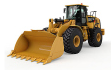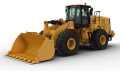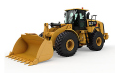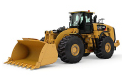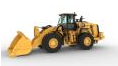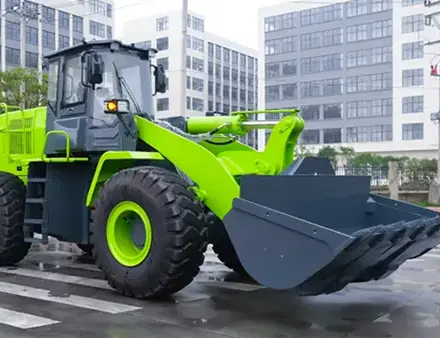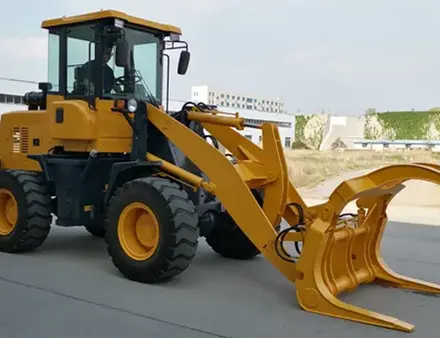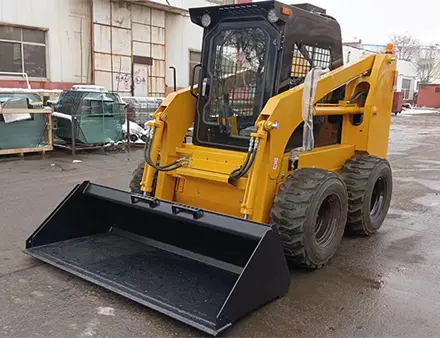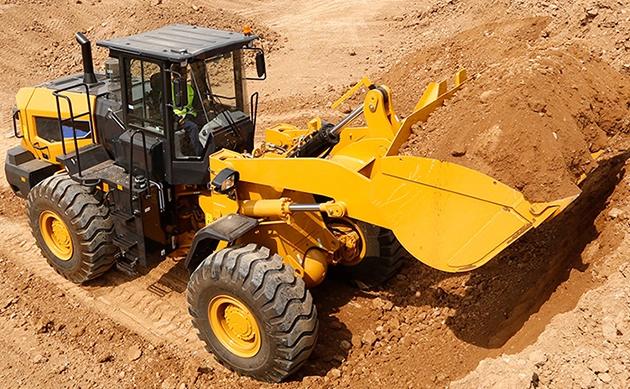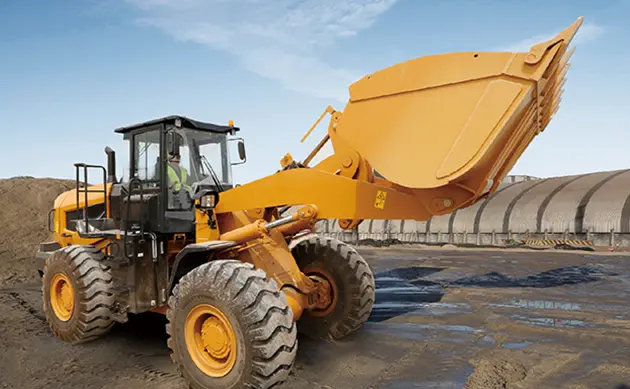
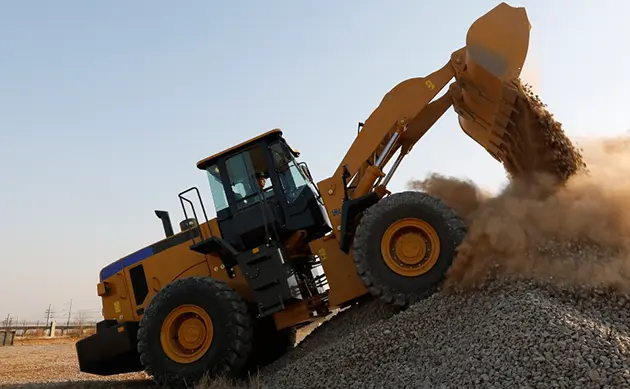
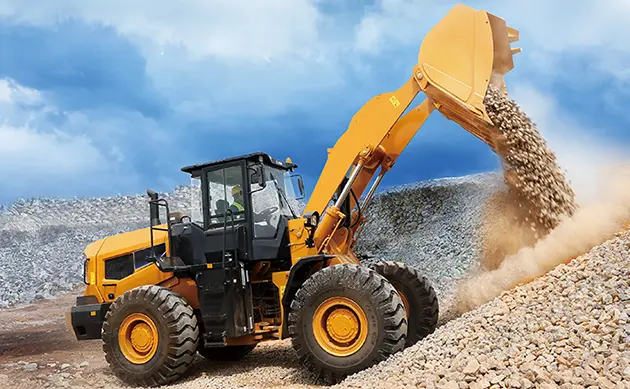
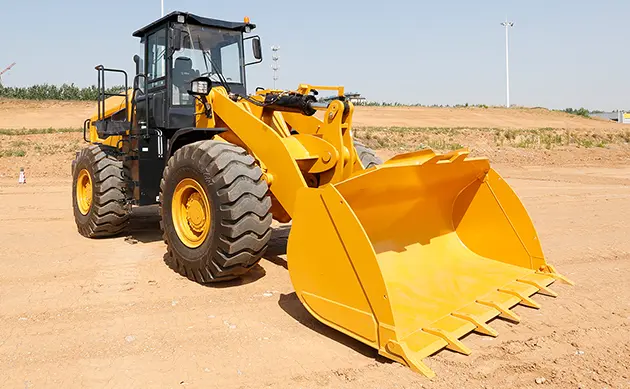

Wheel loaders are essential heavy equipment in construction and material handling. They feature a robust, articulated chassis that provides excellent maneuverability, allowing them to turn tightly in confined spaces. The large front bucket, mounted on strong lift arms, can scoop up significant volumes of materials like soil, gravel, and sand. Powered by a potent diesel engine, they offer high productivity with quick loading cycles. The operator's cab is designed for comfort, with ergonomic controls and good visibility. When sourcing a wheel loader in China for loading trucks at a quarry, stockpiling materials on a construction site, or handling bulk goods, buyers should compare rated load, bucket capacity, engine configuration, attachment options, spare-parts availability, and after-sales support. Selecting the right machine and supplier can make a significant difference in productivity, operating costs, and long-term reliability.
| Pictures |
|
|
|
|
|  |
| Basic parameters | ||||||
| Model | 966L | 966GC | 972L | 980L | CAT982 | CAT 988 |
| Rated load capacity (kg) | 6600 | 6600 | 7200 | 8000 | 8000 | 51062 |
| Total operating weight (kg) | 23220 | 21577 | 24890 | 30090 | 35510 | 14500 |
| Bucket capacity (m³) | 3.20~7.40 | 3.8-7.1 | 2.8-14 | 4.2-12.2 | 4.8-17.2 | 4.7-13 |
| Maximum digging force (lifting force) (kN) | 173 | 196 | 224 | |||
| Travel mode | Tire-type | Tire-type | Tire-type | Tire-type | Tire-type | |
| Application | General purpose | General purpose | General purpose | General purpose | General purpose | |
| Tonnage range | 5-8 tons | 5-8 tons | 5-8 tons | Over 8 tons | 5-8 tons | |
| Power Type | Fuel | Fuel | Fuel | Fuel | Fuel | |
| Engine (fuel) | ||||||
| Model | C9.3 ACERT | Cat C9.3B | C9.3 ACERT | C13 ACERT | Cat C13 | Cat C18 |
| Rated power/speed (kW/r/min) | 207/1700 | 239@2200 | 253/1600 | 278.0/1800 | 301/1700 | 439/1700 |
| Maximum torque/speed (N·m/r/min) | 1507/1000 | 1779@1200 | 1632/1100 | 2040/1000 | 3023/1500 | |
| Total Displacement (L) | 9.3 | 9.3 | 9.3 | 12.5 | 449 | 18.1 |
| Engine Brands | Caterpillar | Caterpillar | Caterpillar | Caterpillar | Caterpillar | Caterpillar |
| Emission standard | Euro 4 | Euro 4 | Euro 4 | Euro 4 | Euro 4 | Euro 4 |
| Hydraulic system | ||||||
| Flow rate (at rated speed) (L/min) | 320 | 580 | ||||
| Rated working pressure (Mpa) | 27.9 | 32.8 | ||||
| Travel speed 1st gear (forward/reverse) (km/h) | 6.5/7.1 | 6.4/7.0 | 6.9/7.8 | 6.9/7.8 | 6.5/7.5 | |
| Travel speed 2nd gear (forward/reverse) (km/h) | 13.1/14.4 | 12.1/13.2 | 13.1/15.0 | 13.3/15.2 | 11.6/13.3 | |
| Travel speed 3rd gear (forward/reverse) (km/h) | 23.5/25.9 | 21.0/23.0 | 23.2/26.5 | 23.5/26.9 | 20.4/23.2 | |
| Travel speed 4 speeds (forward/reverse) (km/h) | 39.5/39.5 | 34.8/36.9 | 39.5/39.5 | 39.5/39.5 | 34.7 | |
| Fuel volume | ||||||
| Fuel tank capacity (L) | 303 | 320 | 303 | 426 | 426 | 712 |
| Hydraulic System (L) | 125 | 120 | 125 | 153 | 153 | 240 |
| Engine oil (L) | 25 | |||||
| Cooling System (L) | 71.6 | 53 | 71.6 | 45 | 52 | 120 |
| Transmission System (L) | 58.5 | 55 | 58.5 | 77 | 120 | |
| Dimension | ||||||
| Overall length (mm) | 7362 | 9315 | 9627 | |||
| Overall width (mm) | 2230 | 2230 | 2440 | |||
| Overall height (mm) | 3859 | 2804 | 3859 | 4112 | ||
| Minimum Ground Clearance (mm) | 434 | 455 | 434 | 453 | ||
| Bucket width (mm) | ||||||
| Wheelbase (mm) | 3550 | 3550 | 3550 | 3800 | ||
| Unloading height - unloading angle of 45° (mm) | 2991 | 3154 | 3273 | |||
| Unloading distance - unloading angle of 45° (mm) | 1353 | 1357 | 1481 | |||
| Minimum turning radius (at center of outside wheel) (mm) | 6761 | 6761 | 14806 |
Specifications may vary by machine model, production year, engine configuration, and destination-market requirements. Contact Fanbuzhe to confirm current availability and the final technical specification before ordering.
A wheel loader's performance depends on how its engine, bucket, hydraulic system, transmission, tires, and attachments are matched to the application. Buyers should confirm the following configurations for each available machine model before ordering.
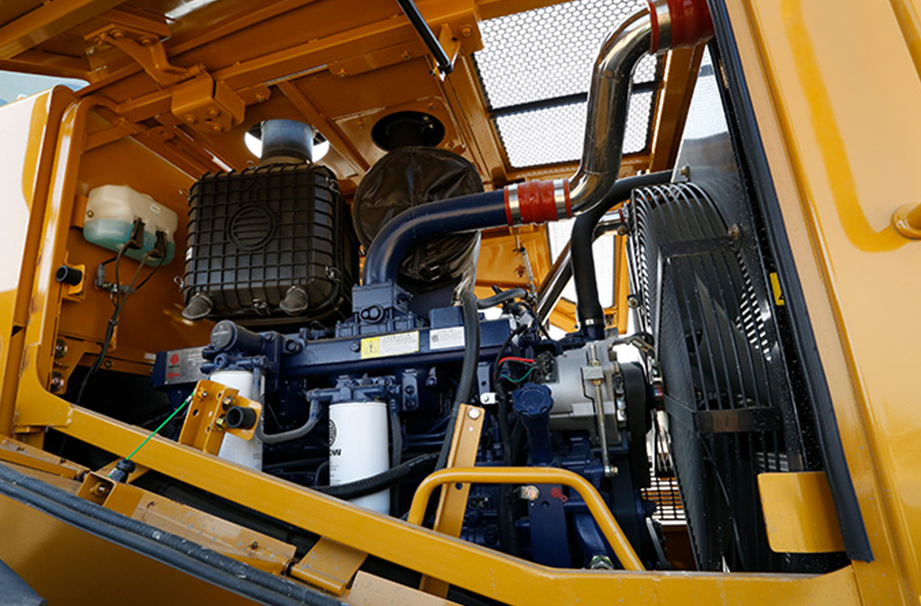
1. Bucket: Standard, rock, light-material, and high-dump buckets can be selected for different materials and loading conditions. Bucket capacity should be matched to material density and the machine's rated load.
2. Lift Arms: Hydraulic flow, working pressure, breakout force, lifting performance, and auxiliary hydraulic requirements should be checked according to the bucket or attachment being used.
3. Hydraulic flow, working pressure, breakout force, lifting performance, and auxiliary hydraulic requirements should be checked according to the bucket or attachment being used. Buyers who also require replacement components can review Fanbuzhe’s hydraulic parts China range and confirm compatibility using the machine model and part number.
4. Engine: Usually a diesel engine, it is the power source that drives the hydraulic system and provides the energy for the loader to move and operate.
5. Transmission: Transmission type, forward and reverse gears, travel speed, and torque converter configuration affect productivity on different terrains and operating cycles.
6. Axles and Wheels: Axle and tire specifications should be selected according to rated load, ground conditions, travel distance, and application. Reinforced or mining tires may be required for rocky and heavy-duty sites.
7. Cab: Available cab options may include air conditioning, heating, ROPS/FOPS protection, working lights, rear-view cameras, and adjustable operator controls.
8. Spare Parts: Buyers can request filters, seals, hydraulic hoses, bucket teeth, cutting edges, and other maintenance parts to be supplied with the wheel loader.
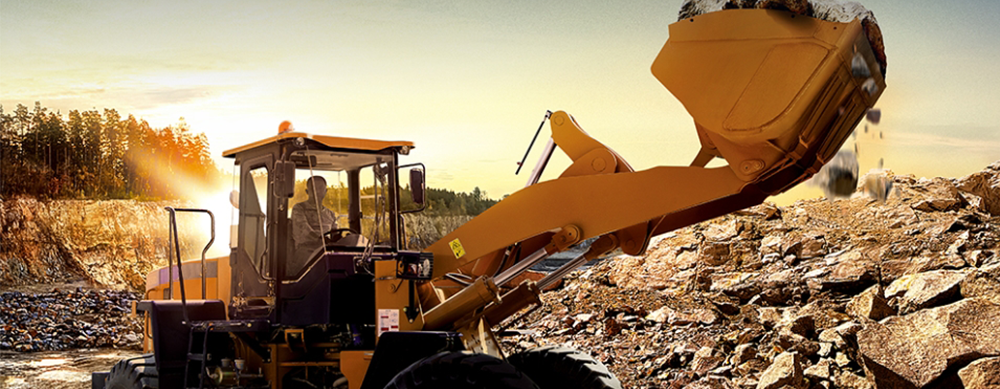
1. Bucket Capacity: Determine the volume of material you need to move in a single scoop. Bucket capacities can range widely, from small loaders with a capacity of around 1-2 cubic yards to large industrial loaders with capacities exceeding 10 cubic yards.
2. Cycle Time: The time it takes to complete a loading cycle (lift, carry, dump, and return) is crucial for productivity.
3. Terrain Conditions: Consider the type of ground on which the loader will operate. If it's a rough construction site with uneven surfaces, you'll need a loader with good ground clearance and durable tires or tracks.
4. Space Constraints: In confined work areas like warehouses or small construction yards, a compact wheel loader with a small turning radius is essential.
5. Engine Power: A powerful engine is necessary for handling heavy loads and maintaining efficient operation. The engine's horsepower and torque output should match the demands of your work.
6. Lifting Capacity: Check the maximum weight the loader can lift and carry at different heights and reaches. This is vital for ensuring it can handle the materials you work with.
7. Transmission Type: There are different transmission options, including manual, automatic, and hydrostatic transmissions.
8. Operator Comfort: A well - designed cab with an ergonomic seat, good climate control, and low noise and vibration levels reduces operator fatigue.

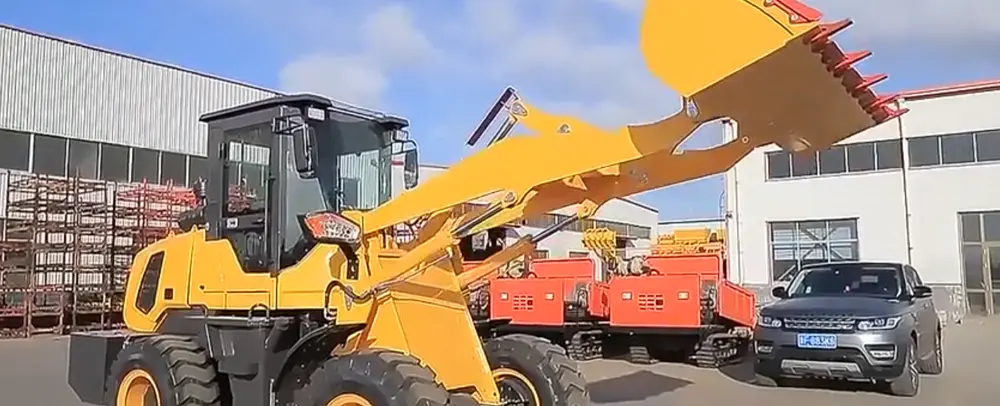
Wheel loaders are renowned for their large front-mounted buckets that can handle substantial volumes of materials. The bucket sizes vary, allowing for different load capacities depending on the model and intended use.
These machines have an articulated chassis design that gives them exceptional maneuverability. The ability to pivot in the middle allows for a tight turning radius, which is crucial when operating in confined spaces like construction sites, warehouses, or loading docks.
Wheel loaders are equipped with a robust diesel engine that provides the power required for both movement and loading operations.
One of the key features of wheel loaders is their compatibility with a wide range of attachments. In addition to the standard bucket, they can be fitted with other useful tools such as pallet forks for handling pallets and shipping containers, snow blades for snow removal, and brush cutters for land-clearing.
The operator's cab in a wheel loader is designed with comfort and functionality in mind. It features an ergonomic seat to reduce operator fatigue during long-working hours.
Wheel loaders have a solid frame and body structure made of high-strength materials to withstand the rigors of heavy-duty work. The bucket, lift arms, and other components are also built to be durable and resistant to wear and tear.


 English