Across municipalities, private sanitation contractors, industrial parks, residential communities, and commercial districts worldwide, labor shortages have become one of the most serious operational challenges in waste collection — not simply a cost management problem, but a route reliability problem that threatens the consistency of essential public services that communities depend on every day. In 2026, the combination of difficulty recruiting sanitation workers willing to perform physically demanding manual collection work, rising labor wages and overtime costs driven by competition for available workers, higher injury rates from manual bin lifting that increase sick leave and workers' compensation costs, and growing pressure to collect more waste from expanding urban populations with fewer available employees has created a structural operational crisis for waste management operators who continue to rely on traditional three-person manual collection crews.
A side load truck — equipped with a hydraulic side-loading arm that grabs, lifts, overturns, and empties curbside waste containers from the cab or nearby control position — provides the automation solution that allows municipalities and contractors to collect the same routes with significantly fewer workers, reduce the manual lifting injuries that drive sick leave and turnover, improve route consistency and predictability, and build a waste collection model that is less vulnerable to the labor market pressures that are reshaping the economics of sanitation services globally. For buyers evaluating a side loader garbage truck in China, Fanbuzhe's side loader garbage truck is designed with an automated side loading mechanism, hydraulic operating system, sealed garbage compartment, and curbside collection capability for urban and municipal waste routes — providing the automation capability and operational reliability that labor-shortage-driven waste management modernization requires.
This guide covers the complete picture for municipal procurement managers, sanitation contractors, and fleet operators: why labor shortages are raising waste collection costs, what a side load truck is and how it functions as an automated waste collection platform, how one-driver operation reduces labor cost by more than 50% on suitable routes, how to evaluate side load truck components for hydraulic reliability and operational performance, and what maintenance practices protect truck performance and route productivity through the vehicle's service life.
The operational and financial case for investing in side load truck automation starts with an honest assessment of the specific labor shortage mechanisms that are making traditional three-person manual collection crews increasingly expensive, unreliable, and unsustainable in 2026's waste management environment.
Recruitment difficulty for manual sanitation work is the structural labor market problem that most directly threatens route reliability for waste management operators who depend on manual collection crews. In 2026, the combination of physically demanding working conditions, traffic exposure risk, early morning schedules, and the availability of less physically demanding employment alternatives has made sanitation worker recruitment increasingly difficult in urban and suburban markets worldwide. Routes that cannot be staffed on schedule create service failures that generate community complaints, regulatory scrutiny, and contract performance penalties that cost far more than the labor savings that manual collection appeared to offer.
Rising wages and overtime costs from crew shortages is the direct financial consequence of recruitment difficulty — because when available workers are scarce, the wages required to attract and retain them increase, and when routes cannot be fully staffed, the workers who are available must work overtime to complete the collection schedule, creating overtime premium costs that compound across every understaffed route in the fleet. For waste management operators running large fleets across multiple routes, the cumulative wage and overtime cost increase from labor market pressure can represent a significant and growing percentage of total operating cost.
Manual lifting injuries creating sick leave and turnover costs is the operational continuity problem that most directly affects route reliability and total labor cost. Manual bin lifting — the core physical task of traditional collection crews — creates a high rate of musculoskeletal injuries that generate sick leave, workers' compensation claims, and permanent workforce attrition that requires continuous recruitment and training investment to replace experienced workers with new hires who are less productive and more injury-prone during their initial period on the route.

Understanding what a side load truck is — and how its hydraulic side arm, sealed compartment, driver-focused controls, and automated lifting cycle work together as an integrated automated waste collection platform — is essential for procurement managers and fleet operators evaluating side loader specifications for labor-shortage-driven waste management modernization.
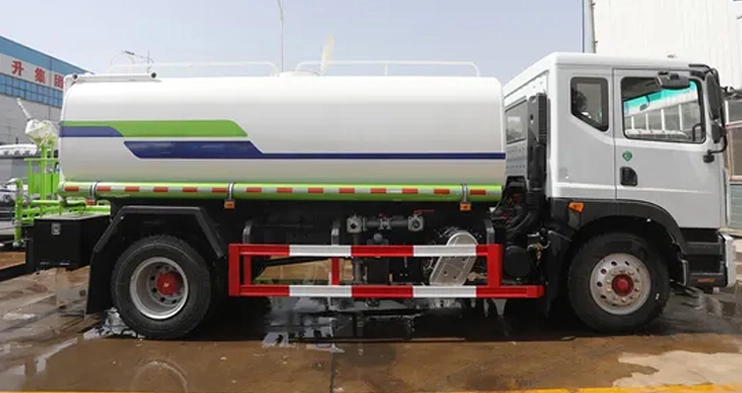
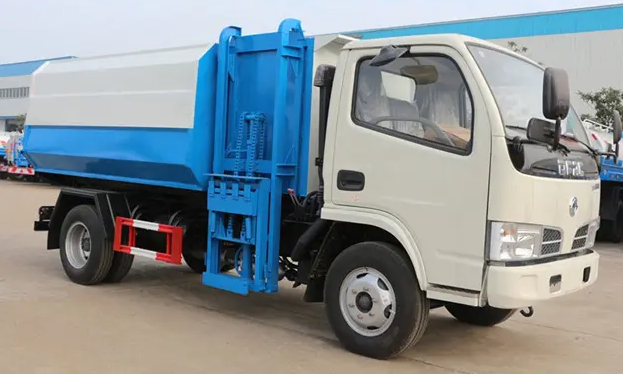
A side load truck is a waste collection vehicle equipped with a side-mounted hydraulic lifting mechanism that grabs, lifts, overturns, and empties waste containers into the truck's sealed garbage compartment — allowing curbside collection to be performed with minimal manual handling and, on standardized routes, by a single driver operating from the cab or nearby control position. Fanbuzhe describes its side loader garbage truck as a highly efficient waste collection vehicle built on a strong chassis, with an automated arm that extends and grabs waste containers from the side of the street — designed for quick curbside collection and reduced manual handling.
| Function | Labor Saving Value |
|---|---|
| Side container pickup | Collects bins without workers manually lifting them |
| Hydraulic lifting | Eliminates the physical lifting that causes most collection injuries |
| Sealed waste compartment | Reduces leakage and odor exposure without manual cleanup |
| Self-loading operation | Improves route efficiency without additional crew |
| Self-discharging design | Simplifies unloading at transfer stations |
| Driver-focused controls | Supports one-person operation on standardized routes |
Fanbuzhe lists a 4x2 Dongfeng 5CBM side loader garbage truck with a 5 CBM garbage bin capacity, 4 mm carbon steel garbage bin body, leakage-proof design, side loading with bucket lifting system, hydraulic operating structure, pusher and scraper device, and a cabin allowing three passengers with air conditioning — providing the operational specification that urban and municipal curbside collection requires.
The technical mechanism by which a side load truck's automated hydraulic arm allows one driver to complete the collection work that traditionally required a driver and two additional collection workers — and how this labor reduction translates into measurable cost savings that justify the investment in automated side loading technology — is the core operational knowledge that municipal procurement managers and sanitation contractors need to build the business case for fleet modernization.
A side load truck performs the complete collection cycle through a hydraulic sequence that the driver controls from the cab or nearby position:
The driver aligns the truck beside the waste container at the curbside pickup point
The side arm extends toward the bin under hydraulic power
The gripping or lifting mechanism secures the container
The hydraulic system lifts and overturns the container over the garbage compartment
Waste is dumped into the sealed compartment
The container is returned to its original curbside position
The truck advances to the next pickup point
Fanbuzhe explains that the side loading mechanism is the core feature of the truck and is powered by a hydraulic system that allows the arm to extend, retract, lift, and lower with precision — providing the automated lifting capability that enables one-driver operation on standardized curbside routes.
The direct labor cost reduction from side load truck automation is calculated from the crew size reduction it enables:
Traditional manual collection crew: 1 driver + 2 collection workers = 3 crew members per truck
Side load truck operation on standardized routes: 1 driver = 1 crew member per truck
Direct crew size reduction: 66% reduction in route crew headcount
After accounting for supervisor time, route conditions, backup labor requirements, and the proportion of routes suitable for one-driver automated operation, many waste management operators can realistically target more than 50% labor cost reduction on suitable automated curbside routes — a saving that compounds across every route in the fleet and every working day in the collection schedule.
Reducing waste collection costs through side load truck automation requires a systematic approach that combines equipment selection, route design, container standardization, and operational discipline:
Deploy side load trucks on standardized curbside bin routes where containers are consistently placed and sized for automated lifting
Standardize bin sizes and placement protocols across the collection area to maximize the proportion of pickups that can be completed without manual intervention
Optimize route planning to minimize idle driving time between pickup points and maximize the number of bins collected per operating hour
Train drivers on accurate truck positioning and fast pickup cycle execution to maximize route productivity
Maintain the hydraulic system proactively to prevent the arm failures and hydraulic leaks that interrupt routes and require manual backup
Track cost per ton or cost per household collected to measure the actual labor saving achieved and identify routes where further optimization is possible
The systematic evaluation of side load truck components — hydraulic side arm, sealed compartment, chassis, control system, and safety equipment — against the requirements of the specific waste collection application is the technical procurement knowledge that ensures the selected truck delivers the automation capability and operational reliability that labor-cost reduction requires.
| Component | Function | Buyer Evaluation Criterion |
|---|---|---|
| Chassis | Supports full vehicle load and route operation | Strength, payload capacity, maneuverability in urban streets |
| Side loading arm | Grabs and lifts bins from roadside | Lifting capacity, reach, cycle speed, bin compatibility |
| Hydraulic system | Powers arm movement and waste handling | Reliability, pressure stability, maintenance access |
| Garbage compartment | Stores collected waste | Capacity, sealing quality, corrosion resistance |
| Pusher and scraper | Compacts and unloads waste | Smooth operation and durability under daily use |
| Control system | Operates loading mechanism | Cab control layout, ease of use, driver ergonomics |
| Safety lights and signals | Protects truck and surrounding traffic | Visibility during day and night routes |
| Mirrors and visibility aids | Help driver align with bins | Safety and pickup accuracy |
Fanbuzhe highlights the side loading arm, hydraulic system, corrosion-resistant cargo compartment, heavy-duty chassis, cab comfort, and visibility equipment as key features of its side loader garbage truck — with the hydraulic system including a hydraulic pump driven through the truck's engine via PTO that pressurizes hydraulic fluid and directs it to the cylinders of the side loading arm.
| Buyer Scenario | Primary Specification Focus | Secondary Evaluation Criterion |
|---|---|---|
| City sanitation department | Route efficiency, durability, sealed compartment | Spare parts availability and service support |
| Private waste contractor | Labor savings and fast ROI | Hydraulic reliability and maintenance cost |
| Residential community collection | Bin compatibility and maneuverability | Turning radius and street width compatibility |
| Commercial waste route | Capacity and hydraulic lifting strength | Loading cycle speed and daily volume capacity |
| Narrow urban streets | Compact chassis and turning radius | Arm reach and bin positioning flexibility |
| High-frequency daily operation | Hydraulic reliability and spare parts support | Maintenance access and component durability |
The hydraulic system is the component that most directly determines the side load truck's route productivity and labor-saving capability — because a hydraulic failure during a collection route eliminates the automation advantage that justifies the truck's investment, forces manual backup procedures that require additional crew, and creates route delays that affect service reliability. Buyers should evaluate hydraulic pump quality, cylinder design, hose and fitting specification, oil contamination protection, and maintenance access when comparing side loader specifications — because the hydraulic system's reliability determines whether the truck delivers its labor-saving promise consistently across its service life.
Procuring the right side load truck for a specific waste collection application requires systematic pre-order confirmation of route requirements, bin specifications, hydraulic performance, chassis preferences, and operational conditions — and a maintenance program that protects hydraulic reliability and route productivity through the vehicle's service life.
Before requesting a quotation for a side load truck, prepare and confirm the following:
Confirm the waste container sizes and weights that the arm must lift — and verify that the selected truck's arm lifting capacity and grip design are compatible with the specific bins used on the collection route
Confirm the road widths and route conditions — and verify that the selected chassis dimensions and turning radius are appropriate for the narrowest streets on the collection route
Confirm the daily collection volume and number of pickup points per route — and verify that the selected garbage compartment capacity is sufficient for the route without requiring intermediate unloading stops that reduce productivity
Confirm the chassis brand and emission standard requirement — and verify that the selected chassis meets the import requirements, emission standards, and road regulations of the destination country
Confirm the hydraulic system specification — and verify that the hydraulic pump capacity, arm reach, and lifting cycle speed are appropriate for the collection speed target of the route
Confirm the spare parts availability and after-sales support — and verify that the supplier can provide the hydraulic components, arm parts, and chassis spare parts that the truck requires at the operating location
Confirm the driver training requirement — and verify that the supplier can provide the operator training documentation and support that new drivers need to operate the automated arm safely and efficiently
Inspect the side loading arm daily before routes — checking for hydraulic leaks, arm alignment, grip mechanism condition, and any damage from the previous day's operation that could affect performance or safety
Check hydraulic hoses, cylinders, seals, and fittings at the recommended interval — hydraulic leaks are the most common cause of arm performance degradation and the most preventable through regular inspection
Monitor hydraulic oil level and contamination — contaminated hydraulic oil accelerates pump and cylinder wear, reducing the hydraulic system's reliability and service life
Lubricate moving joints according to the maintenance schedule — proper lubrication of arm pivot points, grip mechanism components, and pusher and scraper moving parts prevents the wear that reduces cycle speed and increases maintenance cost
Inspect the garbage compartment for leakage or corrosion after each route — addressing leakage points promptly prevents the waste contamination and corrosion damage that reduce compartment service life
Train drivers to align correctly with containers before activating the arm — proper positioning reduces the arm stress, grip failures, and container damage that occur when the arm must compensate for poor truck positioning
In 2026, the municipalities, sanitation contractors, and waste management operators that achieve the lowest collection cost per household, the most reliable route performance, and the strongest operational resilience in the face of labor market pressure are those that have invested in side load truck automation — replacing the three-person manual collection crews that are increasingly difficult to recruit, expensive to retain, and vulnerable to injury-driven absenteeism with one-driver automated collection systems that deliver consistent, predictable route performance regardless of labor market conditions. The investment in side load truck technology is not simply a labor cost reduction decision — it is a strategic operational resilience decision that determines whether a waste management operation can continue to deliver reliable service as labor market conditions continue to tighten.
Fanbuzhe provides special trucks, sanitation trucks, side loader garbage trucks, engineering machinery, road machinery, mining equipment, spare parts, project support, and one-stop engineering solutions for buyers looking for reliable side loader garbage truck in China options.
Contact Fanbuzhe today to discuss your route type, bin size, lifting capacity, garbage compartment volume, chassis preference, emission standard, hydraulic system needs, and fleet procurement plan. Fanbuzhe can help evaluate the right side load truck specification for your waste collection application and provide the technical support and supply reliability that professional municipal and commercial waste management fleet procurement requires.
Q1: What is a side load truck and how does it work?
A side load truck is a waste collection vehicle equipped with a side-mounted hydraulic lifting mechanism that grabs, lifts, overturns, and empties curbside waste containers into the truck's sealed garbage compartment. The driver aligns the truck beside the waste container, activates the hydraulic side arm from the cab or nearby control position, and the arm extends, grips, lifts, and dumps the container automatically — allowing curbside collection to be performed with minimal manual handling and, on standardized routes, by a single driver without additional collection crew.
Q2: How does a side loader garbage truck reduce labor costs by more than 50%?
A side loader garbage truck reduces labor costs by automating the container lifting and dumping cycle that traditionally required two additional collection workers walking beside the truck. On standardized curbside routes where bins are consistently placed and sized for automated lifting, one driver can complete the collection work that previously required a driver plus two workers — reducing the route crew from three to one, a 66% reduction in headcount. After accounting for route conditions and backup labor requirements, many operators achieve more than 50% labor cost reduction on suitable automated routes.
Q3: How to reduce waste collection costs with side load truck technology?
Reduce waste collection costs by deploying side load trucks on standardized curbside bin routes, standardizing bin sizes and placement protocols to maximize automated pickup efficiency, optimizing route planning to minimize idle driving time, training drivers on accurate positioning and fast pickup cycle execution, maintaining the hydraulic system proactively to prevent route interruptions, and tracking cost per household collected to measure actual savings and identify further optimization opportunities. The combination of automation, route standardization, container compatibility, and disciplined maintenance delivers the greatest cost reduction.
Q4: Can one person really operate a side loader garbage truck safely?
Yes, many side load trucks are designed for one-person operation on standardized curbside routes where containers are consistently placed for automated lifting. The driver operates the hydraulic side arm from the cab or nearby control position, completing the lift, dump, and return cycle without leaving the vehicle. Actual staffing requirements depend on local safety regulations, route layout, container placement consistency, traffic conditions, and the operator's safety policy — and some routes or conditions may require additional personnel for safety or operational reasons.
Q5: What should buyers check when choosing a side loader garbage truck in China?
Buyers should check the arm lifting capacity and verify it is sufficient for the heaviest bins on the route, the arm reach and verify it covers the bin placement distance from the truck, the garbage compartment capacity and verify it is sufficient for the route volume, the hydraulic system reliability and maintenance access, the chassis strength and maneuverability for the route's road conditions, the sealed compartment design and leakage prevention, the driver visibility and safety equipment, the spare parts availability and after-sales support at the operating location, and the bin compatibility with the specific container sizes and designs used on the collection route.
 English