In mining, quarrying, aggregate production, and infrastructure material processing, the jaw rock crusher is the heart of the primary crushing stage — and in 2026, as energy costs continue to pressure operating margins across the global construction materials industry, plant owners and procurement managers can no longer evaluate primary crushing equipment only by purchase price or peak hourly output. The correct evaluation framework for a jaw rock crusher in 2026 is cost per ton — a metric that captures how efficiently the primary crusher reduces large feed material, how much workload it transfers to the secondary crushing stage, how much energy the complete crushing circuit consumes per ton of finished aggregate, and how reliably the crusher maintains its performance through the wear cycles, feed variations, and operational demands of continuous production.
For buyers comparing jaw crusher China solutions, the performance difference between a high-ratio primary crusher with a deep crushing chamber, large feed opening, hydraulic gap adjustment, and durable jaw plate design and a basic crusher that struggles with large feed, creates oversized discharge, and forces the secondary crusher to work harder than its design intent is not measured in the purchase price difference — it is measured in the daily energy cost difference, the secondary crusher wear cost difference, the throughput difference, and the maintenance downtime difference that accumulate across every production shift throughout the equipment's service life. Fanbuzhe's jaw crusher is designed for hard materials such as rocks, ores, gravel, granite, quartzite, and limestone, using a fixed jaw and movable jaw to generate compressive crushing force for reliable primary reduction — providing the crushing performance and operational reliability that energy-cost-sensitive plant operations require.
This guide covers the complete picture for plant owners, quarry managers, and procurement teams: why inefficient primary crushing raises cost per ton, what a jaw rock crusher is and how it functions as the plant's first gatekeeper, how deep crushing chamber design improves primary crushing efficiency, how to evaluate jaw crusher components for long-term performance and ROI, and what maintenance practices protect crushing efficiency and equipment life through the crusher's service life.
The energy cost and operational efficiency case for investing in a high-ratio jaw rock crusher starts with a clear understanding of how primary crushing performance affects every downstream process in the crushing circuit — and why the cost consequences of inefficient primary crushing compound through the secondary crusher, screening system, conveyors, and power system to create a total plant cost per ton that is significantly higher than it needs to be.
Oversized discharge forcing secondary crusher overwork is the most direct and most costly consequence of inefficient primary crushing — because it transfers the size reduction burden that the jaw crusher should have completed to the secondary crusher, which is typically a cone crusher or impact crusher designed for intermediate reduction rather than primary breaking of large rock. When the jaw crusher produces oversized discharge because its feed opening is too small, its crushing chamber is too shallow, or its closed-side setting is too large for the downstream requirement, the secondary crusher must work harder, wear faster, consume more energy per ton, and require more frequent maintenance than its design intent — creating operating costs that accumulate with every production hour.
Higher energy consumption per ton from recirculation is the energy cost consequence that most directly affects the plant's operating margin in 2026's high-energy-cost environment. When primary crushing is inefficient, oversized material that should have been reduced at the first stage recirculates through the crushing circuit — consuming conveyor energy, screen energy, and secondary crusher energy to process material that a properly specified jaw rock crusher would have reduced in a single pass. The energy cost of recirculation is invisible in the crusher's own power consumption figure but highly visible in the plant's total electricity bill and cost per ton calculation.
Production instability from blockage and feed variation is the throughput consequence that most directly affects daily aggregate output and project schedule performance. A jaw crusher that cannot accept the full range of feed sizes from the excavator or loader creates blockage events, production stoppages, and manual intervention requirements that reduce the plant's effective operating hours and increase the labor cost per ton of finished aggregate.
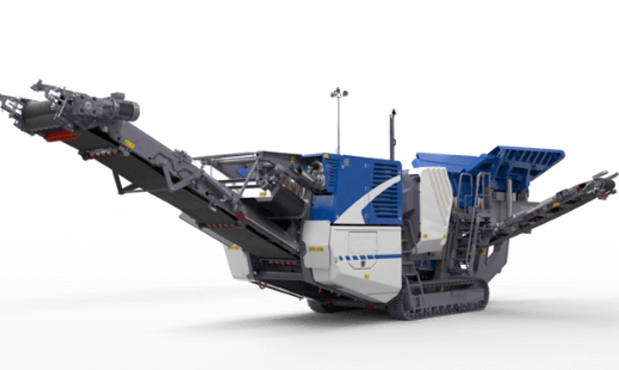
Understanding what a jaw rock crusher is — and how its crushing mechanism, chamber geometry, gap adjustment capability, and component design work together as the plant's first gatekeeper that determines the performance of every downstream process — is essential for plant owners and procurement managers evaluating primary crusher specifications for mining, quarrying, and aggregate production applications.
A jaw rock crusher is a primary crushing machine used to reduce large rocks, ores, and construction materials into smaller particles through compressive force. Fanbuzhe describes its jaw crusher as a fundamental and efficient crushing device widely used in mining, quarrying, and construction industries — using a fixed jaw and movable jaw to generate the compressive crushing force that breaks hard rock, ore, gravel, granite, quartzite, and limestone at the primary stage.
The jaw crusher is the first major size-reduction machine in the crushing plant — and its performance determines the workload, energy consumption, wear rate, and throughput of every downstream process. If this stage is efficient, the whole crushing circuit becomes easier to control, more energy-efficient, and more productive. If this stage is inefficient, the problems it creates compound through every subsequent process in the plant.
| Stage | Equipment | Performance Dependency |
|---|---|---|
| Feed preparation | Excavator or loader, vibrating feeder | Feed size and continuity |
| Primary crushing | Jaw rock crusher | Feed acceptance, reduction ratio, discharge control |
| Secondary crushing | Cone crusher or impact crusher | Dependent on jaw crusher discharge quality |
| Screening | Vibrating screen | Dependent on secondary crusher output consistency |
| Material handling | Conveyor system | Dependent on stable throughput from crushing stages |
| Product storage | Stockpile | Dependent on consistent aggregate quality |
The technical mechanism by which deep crushing chamber design, large feed opening, optimized nip angle, and hydraulic gap adjustment improve primary crushing efficiency — and how these design features translate into higher reduction ratio, lower secondary crusher workload, and lower energy consumption per ton — is the core engineering knowledge that plant managers and procurement teams need to evaluate jaw crusher specifications for energy-cost-sensitive operations.
A jaw crusher crushes material through compression — the movable jaw reciprocates toward the fixed jaw, squeezing rock until it fractures, and as the jaw opens, crushed material moves downward and exits through the discharge gap. The efficiency of this process is determined by the crushing chamber geometry: the feed opening size that determines the maximum rock the crusher can accept, the chamber depth that determines how much size reduction occurs before material exits, the nip angle that determines how effectively the jaws grip and crush material, and the closed-side setting that determines the discharge size and the workload transferred to the secondary crusher.
| Design Feature | Operational Benefit | Energy Cost Impact |
|---|---|---|
| Larger feed opening | Accepts bigger raw rock pieces without pre-breaking | Reduces excavator and loader cycle time |
| Longer crushing path | Improves material reduction before discharge | Reduces secondary crusher workload |
| Better nip angle | Grips and crushes material more effectively | Reduces recirculation and energy waste |
| Higher chamber utilization | Improves throughput per unit of installed power | Lowers energy consumption per ton |
| More stable discharge | Reduces downstream crusher pressure variation | Improves secondary crusher efficiency |
| Fewer blockages | Improves uptime and reduces manual intervention | Lowers labor cost per ton |
Improving primary crushing efficiency requires a systematic approach that addresses the crusher specification, the feeding system, the gap setting, and the downstream circuit design together:
Select a jaw crusher with a feed opening large enough to accept the maximum rock size from the excavator or loader without pre-breaking
Match the crusher's capacity with the feeder, conveyor, and secondary crusher capacity to prevent bottlenecks that reduce throughput
Optimize the closed-side setting based on the downstream secondary crusher's feed size requirement — not simply the maximum output the jaw crusher can produce
Maintain continuous and evenly distributed feeding to prevent the power draw variations and throughput losses that intermittent feeding creates
Use jaw plate material appropriate for the rock hardness and abrasiveness of the specific material being crushed
Monitor crusher power draw and throughput to identify efficiency losses from wear, feed variation, or gap setting drift before they affect production significantly
Fanbuzhe's jaw crusher specifications include a crusher inlet of 1,200 mm × 800 mm, 200 kW crushing power, fully hydraulic gap setting with an adjustment range of 70 mm to 200 mm, and crushing capacity reaching approximately 250 t/h at 100 mm CSS, 325 t/h at 130 mm CSS, and 400 t/h at 160 mm CSS — providing the specification range that covers the most demanding primary crushing applications in mining and quarrying.
The systematic evaluation of jaw rock crusher components — frame, jaw plates, eccentric shaft, flywheel, toggle plate, hydraulic gap adjustment, and lubrication system — against the requirements of the specific crushing application is the technical procurement knowledge that ensures the selected crusher delivers the primary crushing efficiency and long-term reliability that plant ROI requires.
| Component | Function | Buyer Evaluation Criterion |
|---|---|---|
| Frame | Supports the complete crushing structure | Strength, rigidity, fatigue resistance under continuous load |
| Fixed jaw | Stationary crushing surface | Wear material quality and fastening design |
| Movable jaw | Creates crushing motion | Motion stability and jaw plate service life |
| Jaw plates | Directly crush material | Manganese steel quality, profile design, replacement ease |
| Eccentric shaft | Drives movable jaw motion | Strength under bending and torsion in continuous duty |
| Flywheel | Stores energy for stable crushing | Smooth operation and power efficiency |
| Toggle plate | Transfers force and protects crusher | Reliability and replacement access |
| Hydraulic gap adjustment | Controls discharge size | Adjustment speed, accuracy, and wear compensation |
| Lubrication system | Protects bearings and moving parts | Maintenance simplicity and reliability |
Fanbuzhe identifies major jaw crusher components including frame, fixed and movable jaws, eccentric shaft, flywheel, toggle plates, adjustment device, and lubrication device — with jaw plates commonly made from manganese steel for wear resistance in hard rock applications.
| Project Scenario | Primary Specification Focus | Secondary Evaluation Criterion |
|---|---|---|
| Hard rock quarry | Strong frame, manganese jaw plates, large feed opening | Wear part service life and replacement cost |
| Mining ore crushing | High reduction ratio and continuous-duty design | Power efficiency and bearing reliability |
| Granite and basalt crushing | Robust crushing mechanism and wear resistance | Jaw plate profile and replacement frequency |
| Construction aggregate | Stable discharge size and high hourly output | CSS range and hydraulic adjustment capability |
| Energy-cost-sensitive plant | High primary reduction and efficient drive system | kWh per ton and secondary crusher load reduction |
| High-capacity operation | Crusher inlet size, CSS range, feeder capacity | Throughput stability and blockage resistance |
The financial return from investing in a high-ratio jaw rock crusher is calculated through the energy cost reduction it creates across the complete crushing circuit:
Energy Cost Reduction = Lower Secondary Crusher kWh per Ton + Reduced Recirculation Energy + Lower Conveyor Load + Fewer Blockage Events
Daily ROI = Additional Throughput × Revenue per Ton + Energy Cost Savings per Ton × Daily Production Volume
For plants operating in 2026's high-energy-cost environment, the daily energy cost savings from reducing secondary crusher workload through better primary crushing can recover the cost premium of a high-ratio jaw crusher within a single production season — making the investment in primary crushing quality one of the highest-ROI decisions available to plant managers.

Procuring the right jaw rock crusher for a specific mining, quarrying, or aggregate production application requires systematic pre-order confirmation of material characteristics, capacity requirements, circuit design, and operational conditions — and a maintenance program that protects crushing efficiency and equipment life through the crusher's service life.
Before requesting a quotation for a jaw rock crusher, prepare and confirm the following:
Confirm the material type — granite, basalt, limestone, ore, gravel, recycled concrete — and verify that the selected crusher's jaw plate material and frame design are appropriate for the hardness and abrasiveness of the specific material
Confirm the maximum feed size — and verify that the selected crusher's feed opening is large enough to accept the maximum rock size from the excavator or loader without pre-breaking that adds cost and time
Confirm the required discharge size — and verify that the selected crusher's CSS range covers the downstream secondary crusher's feed size requirement
Confirm the required hourly capacity — and verify that the selected crusher's throughput at the required CSS matches the plant's production target
Confirm the available power supply — and verify that the selected crusher's drive power requirement is compatible with the site's electrical supply capacity
Confirm the site layout and installation space — and verify that the selected crusher's dimensions, weight, and foundation requirements are compatible with the installation location
Confirm the spare parts availability and after-sales support — and verify that the supplier can provide the jaw plates, toggle plates, bearings, and other wear parts that the crusher requires at the operating location
Inspect jaw plates regularly for wear — replacing jaw plates before they wear through to the jaw body prevents structural damage that is far more expensive than planned wear part replacement
Keep the closed-side setting correctly adjusted — CSS drift from jaw plate wear increases discharge size, overloads the secondary crusher, and reduces plant efficiency without triggering any alarm
Maintain continuous and even feeding — intermittent or uneven feeding creates power draw variations, throughput losses, and accelerated wear that reduce crusher efficiency and service life
Check bearings and lubrication system at the recommended interval — bearing failure is the most common cause of unplanned jaw crusher downtime, and it is almost always preventable through proper lubrication maintenance
Remove tramp metal before crushing — uncrushable metal objects in the feed can cause catastrophic toggle plate failure and structural damage that requires extended downtime for repair
Monitor abnormal vibration or noise — changes in crusher vibration or noise pattern are early warning indicators of bearing wear, jaw plate loosening, or structural fatigue that should be investigated before they cause failure
Record throughput, power draw, and wear part life — a complete production and maintenance record supports condition-based maintenance decisions and provides the data needed to optimize CSS, feeding rate, and wear part replacement intervals
In 2026, the mining, quarrying, and aggregate production operations that achieve the lowest cost per ton, the highest daily throughput, and the strongest plant efficiency are those that have invested in high-ratio primary crushing capability — jaw rock crushers with large feed openings, deep crushing chambers, hydraulic gap adjustment, and durable jaw plate designs that reduce large rock effectively at the first stage, minimize the workload transferred to secondary crushers, and lower the total energy consumption per ton of finished aggregate across the complete crushing circuit. The jaw rock crusher is not simply the first machine in the crushing plant — it is the efficiency multiplier that determines the performance of every downstream process, and the procurement decision that determines whether the plant operates at its designed cost per ton or at a significantly higher cost that compounds through every production shift.
Fanbuzhe provides mining equipment and engineering solutions, including jaw crushers, cone crushers, impact crushers, vibrating screens, related construction equipment, spare parts support, and project-oriented assistance for buyers searching for reliable jaw crusher China suppliers.
Contact Fanbuzhe today to discuss your raw material, feed size, required output size, target capacity, site layout, power conditions, and full crushing line configuration. Fanbuzhe can help evaluate the right jaw rock crusher specification for your primary crushing application and provide the technical support and supply reliability that professional crushing plant procurement requires.
Q1: What is a jaw rock crusher used for in mining and quarrying?
A jaw rock crusher is used for primary crushing of large rocks, ores, gravel, and hard construction materials — reducing large feed material into smaller particles for secondary crushing, screening, or aggregate production. It is the first major size-reduction machine in the crushing plant and handles hard materials including granite, basalt, limestone, quartzite, and ore that require high compressive force for primary breaking.
Q2: How does a jaw crusher work and what determines its crushing efficiency?
A jaw crusher works through compression — the movable jaw reciprocates toward the fixed jaw, squeezing rock until it fractures, and crushed material exits through the discharge gap as the jaw opens. Crushing efficiency is determined by the feed opening size, crushing chamber depth, nip angle geometry, closed-side setting, jaw plate material, and the consistency of the feeding system — all of which affect how much size reduction occurs at the primary stage and how much workload is transferred to the secondary crusher.
Q3: How to improve primary crushing efficiency in a crushing plant?
Improve primary crushing efficiency by selecting a jaw crusher with a feed opening large enough to accept the maximum rock size without pre-breaking, optimizing the closed-side setting based on the downstream secondary crusher's feed size requirement, maintaining continuous and evenly distributed feeding, matching crusher capacity with feeder and conveyor capacity, using jaw plate material appropriate for the rock hardness, monitoring power draw and throughput to identify efficiency losses early, and designing the complete crushing circuit around cost per ton rather than only peak hourly output.
Q4: Why does a high-ratio jaw crusher reduce energy cost per ton across the plant?
A high-ratio jaw crusher reduces more material at the primary stage — producing a smaller, more consistent discharge that reduces the workload on the secondary crusher, lowers recirculation through the crushing circuit, reduces conveyor and screen energy consumption, and improves the overall energy efficiency of the complete plant. The energy cost savings from reducing secondary crusher workload through better primary crushing can be significant in high-energy-cost operating environments, making the investment in primary crushing quality one of the highest-ROI decisions available to plant managers.
Q5: What should buyers check when evaluating jaw crusher China solutions for mining and quarrying?
Buyers should check the feed opening size and verify it can accept the maximum rock size from the excavator or loader, the CSS range and verify it covers the downstream secondary crusher's feed size requirement, the hourly capacity at the required CSS and verify it matches the plant's production target, the frame strength and jaw plate material for the specific rock hardness and abrasiveness, the hydraulic gap adjustment capability for efficient wear compensation and product size control, the drive power requirement and verify compatibility with the site's electrical supply, and the supplier's spare parts availability, delivery timeline, and after-sales technical support capability.
 English