For road contractors, municipal maintenance teams, and highway construction companies operating in cold weather, mountainous regions, night paving schedules, or long-distance transport conditions, asphalt distributor trucks are only as efficient as their ability to keep bitumen hot, fluid, and spray-ready from the moment the truck arrives at the jobsite to the moment the last meter of road surface is covered. When asphalt cools during transportation or standby — thickening, partially solidifying, or developing viscosity that makes it impossible to spray evenly — the consequences are not simply a technical inconvenience. They are a direct productivity loss that manifests as delayed startup, uneven application, nozzle blockage, fuel waste, idle crew time, and lower daily construction mileage that reduces the contractor's revenue, increases project costs, and creates schedule pressure that compounds across the entire construction program.
This is why buyers searching for asphalt distributor China solutions in 2026 increasingly focus not only on tank capacity and spray width — the specifications that determine what the truck can do when everything is working correctly — but on the heating system, burner performance, insulation quality, circulation design, and overall thermal management capability that determine whether the truck is productive or idle in the cold weather and long-distance transport conditions where heating performance makes the difference between a profitable day's work and an expensive standby. Fanbuzhe asphalt distributor trucks are equipped with a heat-conducting oil heating mode, automatic heating, and an Italian G20 burner — helping contractors maintain asphalt temperature, reduce startup waiting time, and improve jobsite readiness in the demanding conditions where heating system quality determines daily construction output.
This guide covers the complete picture for road contractors, fleet owners, and procurement managers: why bitumen solidification reduces daily paving efficiency, what asphalt distributor trucks are and how they function as mobile thermal-control and precision-spraying systems, how advanced heating systems keep bitumen spray-ready in cold weather, how to evaluate asphalt distributor components for heating performance and spray precision, and what maintenance practices protect heating system reliability and daily construction output through the truck's service life.
The commercial case for investing in asphalt distributor trucks with advanced heating systems starts with a clear understanding of the specific productivity loss mechanisms that bitumen solidification creates in cold weather construction and long-distance transport — and why each mechanism has financial consequences that far exceed the cost difference between a basic and an advanced heating system.
Startup delay from cold asphalt is the most immediately visible productivity loss in cold weather road construction — and the one that most directly affects daily construction mileage. When an asphalt distributor truck arrives at the jobsite after a cold overnight standby or a long transport run in low ambient temperatures, the bitumen inside the tank may have cooled to a viscosity that makes it impossible to spray evenly or at all. The crew must wait while the heating system raises the asphalt temperature back to the working range — idle time that costs labor hours, delays the paving crew waiting for the tack coat, and compresses the productive working window of the day. In winter construction where daylight hours are limited and temperature windows for paving are narrow, startup delay from cold asphalt can eliminate a significant portion of the day's productive capacity before the first meter of road is sprayed.
Nozzle blockage from partially solidified asphalt is the operational disruption that most directly affects spray quality and crew productivity during the working day. When asphalt temperature drops below the working range in the spray bar, pipelines, or nozzles — due to inadequate heating, poor insulation, or extended standby between spray passes — partially solidified bitumen can block individual nozzles, creating uneven application that affects the bonding quality of the pavement layer and requires the crew to stop, clean the blocked nozzles, and restart the spray pass. Each blockage event costs time, wastes asphalt, and creates a quality risk that may require rework — compounding the productivity loss across the working day.
Fuel waste from inefficient heating is the operating cost that accumulates most invisibly but most consistently across the truck's service life. A heating system that requires long warm-up times, loses heat rapidly through poor insulation, or operates inefficiently due to burner performance limitations consumes significantly more fuel per productive hour than a well-designed system — creating an operating cost disadvantage that compounds across every cold weather working day and every long-distance transport run throughout the construction season.
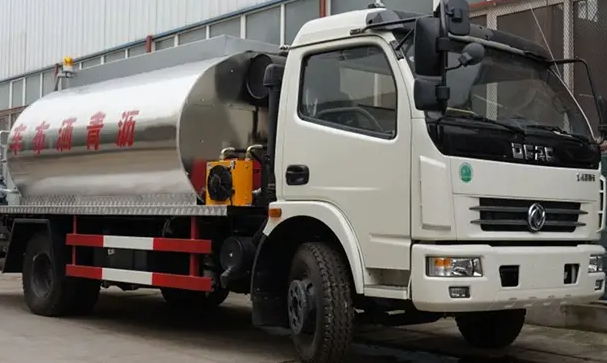
Understanding what asphalt distributor trucks are — and how their heating system, circulation design, spray system, and control architecture work together as an integrated mobile thermal-control and precision-spraying system — is essential for procurement teams evaluating truck specifications for cold weather construction and long-distance transport applications.
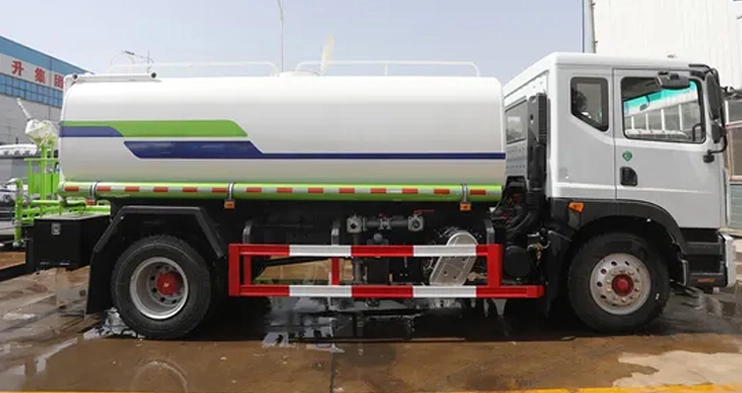
Asphalt distributor trucks are specialized road construction vehicles designed to store, heat, circulate, and spray liquid asphalt evenly onto road surfaces. Fanbuzhe describes an asphalt distributor truck as a specialized road construction vehicle equipped with a large liquid asphalt tank, a spraying system with multiple nozzles, a durable chassis, and a control system that allows operators to adjust spray width, volume, and pressure. They are widely used for tack coat, prime coat, chip seal, surface treatment, road maintenance, and pavement bonding operations across highway, municipal, and rural road construction projects.
An asphalt distributor is not simply a tank truck — it is a mobile thermal-control and precision-spraying system where the heating system, circulation design, pump performance, spray bar geometry, nozzle condition, and operator control capability must all work together to deliver consistent, even asphalt application at the correct temperature and volume. For cold weather construction, the heating system is the productivity engine that determines whether the truck delivers its full daily output or spends a significant portion of the working day in heated standby.
Fanbuzhe's asphalt distributor truck configuration includes a 10m³ FOTON or SINO bitumen distributor with 4.5 to 6 m spray width, 48 asphalt nozzles, QGB950 bitumen pump, 24V electrical system, heat-conducting oil automatic heating mode, and an Italian G20 burner — providing the heating performance, spray precision, and operational reliability that demanding cold weather construction requires.
The technical mechanism by which heat-conducting oil heating systems and high-performance imported burners maintain bitumen at the correct working temperature through cold weather transport and standby — and why this thermal management capability translates directly into shorter startup times, fewer nozzle blockages, and higher daily construction mileage — is the core engineering knowledge that road contractors and fleet procurement managers need to evaluate asphalt distributor truck heating specifications.
A heat-conducting oil heating system uses thermal oil as the heat transfer medium — the burner heats the thermal oil, and the hot oil circulates through heating coils or heat exchange structures to transfer heat uniformly into the asphalt tank and related pipelines. Unlike direct heating systems that apply heat to the tank surface directly, the thermal oil system distributes heat more evenly through the asphalt volume — reducing the cold spots that create viscosity variations, partial solidification, and spray inconsistency in direct-heated tanks.
Fanbuzhe notes that asphalt distributor trucks include a heating and circulation system because asphalt can solidify at lower temperatures, and the system keeps asphalt in a liquid and homogeneous state — providing the thermal management foundation that cold weather construction productivity requires.
| Heating Feature | Cold Weather Operational Value |
|---|---|
| More uniform heat transfer | Reduces cold spots that cause viscosity variations and spray inconsistency |
| Better temperature retention | Helps asphalt remain liquid during long-distance transport and overnight standby |
| Faster readiness from cold start | Shortens waiting time before spraying begins |
| Lower nozzle blockage risk | Keeps spray bar and pipeline temperatures more stable |
| Better material consistency | Supports even spray quality across the full spray width |
| Improved cold-weather operation | Enables productive operation in winter and mountainous conditions |
A high-efficiency bitumen distributor for cold weather construction should combine reliable burner performance with heat-conducting oil heating, good tank insulation, asphalt circulation system, stable pump output, anti-blocking pipeline design, accurate spray pressure control, and easy operator control from the cab. Fanbuzhe's Italian G20 burner provides the heating speed, fuel efficiency, and reliability that cold weather startup and temperature maintenance require — reducing the standby time before construction begins and maintaining the asphalt temperature stability that consistent spray quality demands throughout the working day.
The systematic evaluation of asphalt distributor truck components — heating system, burner, tank insulation, bitumen pump, spray bar, nozzles, and control system — against the requirements of the specific construction application is the technical procurement knowledge that ensures the selected truck delivers the heating performance and spray precision that cold weather construction productivity requires.
| Component | Function | Cold Weather Evaluation Criterion |
|---|---|---|
| Asphalt tank | Stores liquid asphalt | Capacity, insulation thickness, heat retention performance |
| Heating system | Keeps asphalt fluid | Heat-conducting oil design, uniformity, automation |
| Burner | Provides heat source | Heating speed, fuel efficiency, cold start reliability |
| Thermal oil pump | Circulates heat transfer oil | Flow stability and maintenance access |
| Bitumen pump | Delivers asphalt to spray system | Output capacity and pressure stability at working temperature |
| Spray bar | Distributes asphalt across road width | Spray width adjustment and nozzle spacing |
| Nozzles | Atomize and spread asphalt | Anti-clogging design and coverage uniformity |
| Pipeline system | Transfers asphalt | Heating coverage, circulation, cleaning convenience |
| Control system | Adjusts spray parameters | Spray width, flow rate, pressure, temperature monitoring |
| Chassis | Supports mobility and load | Strength, engine power, stability in cold conditions |
| Project Scenario | Primary Heating Requirement | Secondary Specification Focus |
|---|---|---|
| Winter road construction | Strong heating system, burner reliability, tank insulation | Automatic temperature control, fast startup |
| Long-distance asphalt transport | Heat retention and thermal oil circulation | Insulation quality, circulation pump reliability |
| Highway tack coat spraying | Spray width, pump stability, nozzle consistency | Temperature uniformity across spray bar |
| Municipal maintenance | Fast startup, maneuverability | Compact configuration, easy operation |
| Remote construction sites | Fuel efficiency, simple maintenance | Robust chassis, spare parts availability |
| Large-scale paving projects | Tank capacity, daily output, operator control | Spray width, pump capacity, heating automation |
The financial return from advanced heating system investment is calculated through the daily efficiency gain it creates:
Daily Efficiency Gain = Less Heating Standby Time + Fewer Nozzle Blockage Events + Faster Startup + More Continuous Spraying Hours
Additional Daily Revenue = Extra Kilometers Sprayed Per Day × Revenue Per Kilometer
Heating System ROI = Reduced Standby Cost + Reduced Fuel Waste + Reduced Maintenance + Higher Daily Output
For contractors operating in cold weather conditions where startup delays and nozzle blockages are frequent, the daily productivity improvement from an advanced heating system can recover the cost premium over a basic system within a single construction season.

Procuring the right asphalt distributor truck for a specific cold weather construction application requires systematic pre-order confirmation of heating requirements, spray specifications, chassis preferences, and operational conditions — and a maintenance program that protects heating system reliability and daily construction output through the truck's service life.
Before requesting a quotation for asphalt distributor trucks, prepare and confirm the following:
Confirm the climate and ambient temperature range — and verify that the selected truck's heating system, insulation specification, and burner performance are appropriate for the minimum operating temperature of the construction environment
Confirm the required tank capacity — and verify that the selected capacity supports the daily construction mileage target without requiring excessive refilling stops that reduce productive spraying time
Confirm the required spray width — and verify that the selected spray bar configuration covers the road widths required by the project without requiring multiple passes that reduce daily output
Confirm the asphalt type and operating temperature — and verify that the heating system can maintain the required temperature range for the specific bitumen or emulsion being used
Confirm the transport distance and standby time — and verify that the heating system's temperature retention capability is adequate for the longest transport run and standby period the truck will experience
Confirm the heating mode requirement — heat-conducting oil, direct heating, or mixed system — and verify that the selected system provides the temperature uniformity and retention performance required for the operating conditions
Confirm the burner brand and fuel type requirement — and verify that the selected burner provides the heating speed, fuel efficiency, and cold start reliability required for the construction environment
Confirm the chassis brand, engine power, and emission standard — and verify that the selected chassis meets the import requirements, emission standards, and road regulations of the destination country
Confirm the warranty, spare parts availability, and after-sales support — and verify that the supplier can provide the technical support and spare parts supply that the truck's operating location requires
Preheat the system before loading or spraying as required by the operating procedure — starting the heating system before loading ensures that the tank and pipelines are at the correct temperature when asphalt is loaded, reducing the heating time required before spraying begins
Check burner ignition, flame stability, and fuel supply before each working day — verifying that the burner is functioning correctly before the truck leaves the depot prevents startup failures at the jobsite
Inspect heat-conducting oil level and circulation pump condition regularly — maintaining the correct thermal oil level and verifying circulation pump performance ensures that heat is distributed uniformly through the tank and pipelines
Clean spray nozzles after each job — removing asphalt residue from nozzles before it solidifies prevents the blockages that reduce spray quality and require time-consuming cleaning during the next working day
Flush asphalt pipelines according to the manufacturer's procedure — preventing asphalt residue accumulation in pipes and valves that can cause blockages and reduce pump performance
Monitor temperature sensors and control accuracy — verifying that the temperature control system is reading and responding correctly ensures that the asphalt is maintained at the correct working temperature throughout the day
Keep spare nozzles, filters, seals, and burner parts available — having critical spare parts on site prevents extended downtime from component failures that would otherwise require waiting for parts delivery
In cold weather road construction, long-distance asphalt transport, and high-output paving programs, the heating system is the productivity engine of asphalt distributor trucks — and the specification decision that determines whether the truck delivers its full daily construction output or spends a significant portion of the working day in heated standby waiting for bitumen to reach spraying temperature. A heat-conducting oil heating system with a high-performance imported burner, good tank insulation, and automatic temperature control is not a premium option for demanding applications — it is the correct specification for any asphalt distributor truck that must operate productively in the cold weather and long-distance transport conditions where heating performance makes the difference between a profitable construction season and an expensive one.
Fanbuzhe provides road construction machinery and asphalt distributor solutions, including heavy-duty chassis platforms, asphalt tanks, spray systems, heating and circulation systems, operator control systems, customization options, and project-oriented support for buyers searching for reliable asphalt distributor China equipment.
Contact Fanbuzhe today to discuss your tank capacity, spray width, heating mode, burner requirement, chassis preference, cold-weather construction needs, and project delivery schedule. Fanbuzhe can help evaluate the right asphalt distributor truck specification for your road construction application and provide the technical support and supply reliability that professional road construction equipment procurement requires.
Q1: What are asphalt distributor trucks used for in road construction?
Asphalt distributor trucks are specialized road construction vehicles used to store, heat, circulate, and spray liquid asphalt evenly onto road surfaces. They are commonly used for tack coat application before overlay paving, prime coat application on prepared base courses, chip seal and surface treatment operations, pavement maintenance and repair, and road bonding operations across highway, municipal, and rural road construction projects.
Q2: Why is the heating system the most important specification for cold weather asphalt distributor trucks?
In cold weather construction and long-distance transport, asphalt cools and thickens — potentially solidifying in the tank, pipelines, and spray nozzles before it can be applied. A reliable heating system keeps asphalt in a liquid and homogeneous state throughout transport and standby, reducing startup waiting time, preventing nozzle blockages, maintaining spray quality, and enabling the truck to begin productive spraying immediately upon arrival at the jobsite rather than waiting for the asphalt to reheat to working temperature.
Q3: What is a heat-conducting oil heating system and why does it improve cold weather performance?
A heat-conducting oil heating system uses thermal oil as the heat transfer medium — the burner heats the thermal oil, and the hot oil circulates through heating coils to transfer heat uniformly into the asphalt tank and pipelines. Compared with direct heating systems, the thermal oil system distributes heat more evenly through the asphalt volume, reducing cold spots that cause viscosity variations and spray inconsistency, providing better temperature retention during transport and standby, and enabling faster readiness from cold start — all of which directly improve productivity in cold weather construction.
Q4: What should buyers check when evaluating asphalt distributor China solutions for cold weather construction?
Buyers should check the heating mode — heat-conducting oil, direct heating, or mixed system — and verify that it provides adequate temperature uniformity and retention for the operating conditions. They should also check the burner brand and cold start performance, tank insulation thickness and quality, pipeline heating coverage, asphalt circulation system design, automatic temperature control capability, spray width and nozzle quantity, bitumen pump output and pressure stability, chassis strength and engine power, and the supplier's warranty, spare parts availability, and after-sales technical support capability.
Q5: How does advanced heating improve the ROI of asphalt distributor trucks?
Advanced heating improves ROI by reducing non-productive standby time before spraying begins, preventing nozzle blockages that interrupt the working day, maintaining spray quality that reduces rework risk, improving fuel utilization through more efficient heat transfer, and enabling more continuous productive spraying hours per day. The additional daily construction mileage that advanced heating enables — compared with a basic heating system that requires longer startup times and creates more frequent blockage events — generates additional daily revenue that can recover the cost premium of the advanced heating system within a single construction season in cold weather operating conditions.
 English