The internal combustion diesel engine is a symphony of moving parts, but the conductors of this mechanical orchestra are undoubtedly the camshaft and the crankshaft. Understanding the Cam Crankshaft Functions in Diesel Engines is essential for fleet managers, mechanics, and engine enthusiasts to effectively maintain efficient power systems. These two components work in a precise, synchronized dance to convert the raw energy of combustion into usable mechanical power. While the pistons create the force, it is the crankshaft that harnesses it, and the camshaft that dictates the rhythm of the breathing engine.
In the heavy-duty world of diesel applications, the stakes are significantly higher than in standard gasoline engines. Diesel engines operate at much higher compression ratios, generating immense internal pressures and torque. This environment places extreme demands on internal components, requiring robust engineering and precise manufacturing tolerances. A failure in the synchronization between the cam and crank can lead to catastrophic engine damage, resulting in costly downtime and repairs. Therefore, selecting high-quality components from reputable suppliers like Fanbuzhe is not just a purchase—it is an investment in reliability. This article aims to demystify the complex engineering behind these critical components. We will explore how linear motion is transformed, how valve timing is coordinated for optimal efficiency, the metallurgical science required to withstand diesel pressures, and the precision grinding specifications that separate standard parts from premium engine components. By diving deep into these technical aspects, readers will gain a comprehensive understanding of why component quality matters in modern diesel technology.
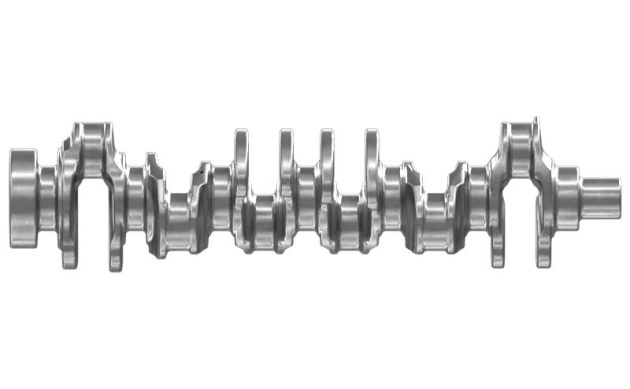
At the core of the engine's power delivery system lies the Conversion of Reciprocating Motion. This is the primary function of the crankshaft. In a diesel engine, fuel ignites within the combustion chamber, driving the piston downward with tremendous force. This movement is linear—straight up and down. However, the transmission, wheels, or hydraulic pumps that the engine drives require rotational motion to operate. The crankshaft serves as the mechanical translator, turning the reciprocal energy of the pistons into the rotational torque needed to perform work. The mechanics of this conversion rely on the geometric design of the crankshaft, specifically the "throws" or crankpins. The connecting rod links the piston to the crankshaft journal, which is offset from the center axis of rotation. As the piston is forced down during the power stroke, it pushes against the offset journal, creating a lever effect that forces the shaft to rotate. This is similar to pedaling a bicycle; your legs move up and down, but the offset pedals convert that energy into the rotation of the chainring. In multi-cylinder diesel engines, these throws are arranged at specific angles to ensure a smooth, continuous delivery of power, referred to as the firing order. Balancing is a critical aspect of this process. Because the pistons and connecting rods have significant mass and are accelerating and decelerating rapidly, they generate massive inertial forces. To counteract this, the crankshaft is equipped with counterweights opposite the rod journals. Without proper balancing, the Conversion of Reciprocating Motion would result in violent vibrations that could shatter the engine block or snap the crankshaft itself. In modern high-torque diesel engines, the precision of this dynamic balancing involves removing or adding minute amounts of material to ensure the engine spins smoothly across its entire RPM range. Furthermore, the torsional forces applied to the crankshaft are not constant; they occur in pulses coinciding with each cylinder's power stroke. This creates a twisting action along the length of the shaft. To manage this flexibility and prevent fatigue failure, a harmonic balancer or torsional vibration damper is attached to the front of the crankshaft. This component absorbs the shock of the power pulses, ensuring the rotational energy is transmitted smoothly to the flywheel and the drivetrain.
| Force Type | Component Origin | Role in Motion Conversion | Engineering Challenge |
|---|---|---|---|
| Linear Force | Piston & Gas Pressure | Input Energy | High compressive loads requiring strong connecting rods. |
| Rotational Force (Torque) | Crankshaft Throw | Output Energy | Shear stress on crankpins and main journals. |
| Inertial Force | Moving Mass (Rod/Piston) | Resistance to change | Requires precise counter-weighting to prevent vibration. |
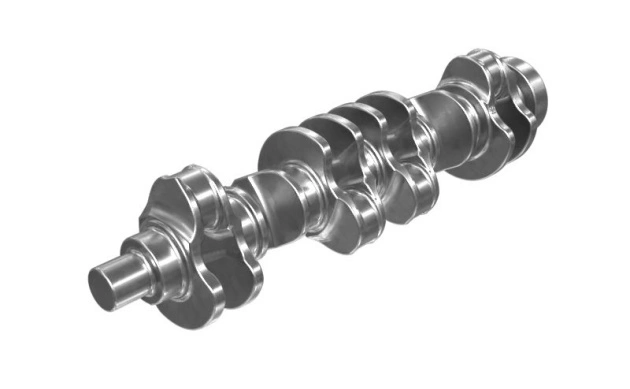
While the crankshaft manages the muscle of the engine, the camshaft manages the brain, specifically through Valve Timing Coordination. Ideally, an engine breathes in fresh air and expels exhaust gases at the exact right moment. The camshaft is responsible for opening and closing the intake and exhaust valves in perfect synchronization with the piston's position. In a standard four-stroke diesel engine, the crankshaft must rotate twice for every single rotation of the camshaft. This 2:1 ratio is strictly governed by the timing gears, chain, or belt connecting the two shafts. The profile of the cam lobes determines the engine's character. The "lift" (how far the valve opens) and "duration" (how long it stays open) are ground into the shape of the lobe. As the camshaft rotates, the egg-shaped lobe pushes against a lifter or follower, which in turn actuates the valve mechanism. In diesel engines, correct timing is even more critical than in gasoline engines due to the lack of spark plugs; combustion relies entirely on the heat of compression. If the intake valves do not open to allow sufficient air volume, or if the exhaust valves do not clear the cylinder efficiently, the compression required for ignition will not occur optimally, leading to poor performance and excessive emissions. Precise Valve Timing Coordination also prevents catastrophic mechanical failure. Most diesel engines are "interference engines," meaning that when the piston is at Top Dead Center (TDC), it occupies the same physical space that the valves occupy when they are fully open. The only thing preventing a collision between the piston and the valves is the timing synchronization. If a timing belt snaps or a gear tooth shears, the valves may stop moving while the pistons continue to reciprocate, leading to the pistons smashing into the valves. This usually results in a destroyed cylinder head and significant engine replacement costs. Modern diesel engines often employ Variable Valve Timing (VVT) to maximize efficiency. Traditional camshafts have a fixed profile, offering a compromise between low-end torque and high-end horsepower. VVT systems allow the engine to alter the timing relative to the crankshaft on the fly. This means the engine can advance timing for better cold starts and low-end torque, and retard timing for better fuel efficiency and emissions control at highway speeds. Maintaining this system requires high-quality oil and precise components, as sludge buildup can impede the hydraulic actuators that adjust the cam timing.
| Component | Function | Failure Consequence |
|---|---|---|
| Cam Lobe | Controls valve lift and duration | Power loss, rough idling, poor emissions. |
| Timing Gear/Chain | Maintains 2:1 Crank-to-Cam ratio | Engine desynchronization, piston-valve collision. |
| Valve Lifter | Transmits cam profile to pushrod/valve | Tapping noise, camshaft lobe wear (wiping). |
| Cam Sensor | Monitors position for ECU injection timing | No-start condition, erratic fuel injection. |
The operating environment of a diesel engine is one of the harshest in the mechanical world, dictating stringent Material Strength Requirements for both crankshafts and camshafts. Diesel engines typically operate with compression ratios ranging from 15:1 to 20:1, compared to the 10:1 average of gasoline engines. This results in cylinder pressures that can exceed 2,000 PSI depending on the turbocharger boost. Consequently, the materials used must possess exceptional tensile strength, fatigue resistance, and surface hardness. Crankshafts in heavy-duty diesel applications are almost exclusively manufactured from forged steel rather than cast iron. The forging process involves heating a billet of steel and hammering it into shape under immense pressure. This aligns the grain structure of the metal with the shape of the component, significantly increasing its strength and resistance to fatigue cracking. While cast iron crankshafts (often nodular iron) are cheaper and possess decent vibration dampening qualities, they generally lack the structural integrity required for high-torque industrial or truck diesel engines. Manufacturers like [Brand Name] ensure that their sourcing involves only high-grade steel forgings to guarantee longevity. Camshafts face a different set of challenges. While they do not transmit the full torque of the engine, the surface of the cam lobes is subjected to extreme sliding friction and contact pressure from the lifters. To survive this, camshafts are often made from chilled cast iron or billet steel, which then undergoes heat treatment processes such as induction hardening or carburizing. This creates a wear-resistant outer "skin" (case) while leaving the core ductile enough to absorb shock without snapping. Nitriding is another common chemical heat treatment used to meet Material Strength Requirements. In this process, the component is exposed to nitrogen-rich gas at high temperatures. Nitrogen diffuses into the surface of the steel, creating an incredibly hard layer that is resistant to wear and corrosion. This is particularly important for the bearing journals on the crankshaft, which must spin against bearing shells for thousands of hours without scoring. A crankshaft with poor surface hardening will rapidly deteriorate if there is even a momentary lapse in lubrication, causing deep grooves that lead to bearing seizure.
Despite the robust engineering, components eventually wear out or fail due to external factors. Recognizing Common Failure Modes is essential for preventative maintenance and troubleshooting. For crankshafts, the most prevalent issue is fatigue failure. This typically manifests as a crack initiating at the fillet radius (the curved corner where the journal meets the crank web). Fatigue failure is often caused by a malfunctioning vibration damper. If the damper fails to absorb torsional twist, the crankshaft functions like a wire coat hanger being bent back and forth until it snaps. Another major killer of crankshafts and camshafts is oil starvation or contamination. These components rely on hydrodynamic lubrication—a thin wedge of pressurized oil that separates metal surfaces. If the oil pressure drops, or if the oil is diluted with fuel (a common issue with faulty injectors in diesels), the metal surfaces make contact. This leads to "spun bearings," where the friction causes the bearing shell to weld itself to the journal and spin inside the block or cap. This catastrophic failure usually mandates a complete engine rebuild or replacement. For camshafts, "lobe wiping" or flattening is a frequent Common Failure Mode, particularly in older pushrod engines or modern engines using improper oil additives. The high-pressure interface between the cam lobe and the lifter requires oils with high levels of Zinc Dialkyldithiophosphate (ZDDP) or similar anti-wear additives. Modern emissions regulations have reduced ZDDP levels in standard oils to protect diesel particulate filters (DPF), leading to increased wear on cam lobes if specific diesel-rated oils are not used. A wiped lobe results in the valve not opening fully, causing a dead cylinder, misfires, and a loss of power. To diagnose these issues, technicians often use oil analysis to look for bearing material (copper, lead, tin) or iron particles. Additionally, measuring crankshaft endplay can indicate

 English